

Chicago, IL: A first-of-its-kind study on the effects of enacting a state-level Child Tax Credit (CTC) in Illinois finds that the policy would reduce child poverty, directly affect a majority of Illinois children, deliver significant income tax cuts to eligible families, and disproportionately impact Black and Latinx households. The analysis from the nonpartisan Illinois Economic Policy Institute (ILEPI) and Project for Middle Class Renewal (PMCR) at the University of Illinois at Urbana-Champaign finds that certain Child Tax Credit structures could reduce child poverty by between 14% and 23% while growing the economy by as much as $3 billion per year and creating or saving as many as 17,000 jobs.
The research comes amidst media reports that US child poverty rates have more than doubled since 2021. Ilinois lawmakers have already announced a CTC proposal for the upcoming state legislative session, and earlier this week, Congressional leaders announced a bi-partisan agreement on an enhanced federal Child Tax Credit.
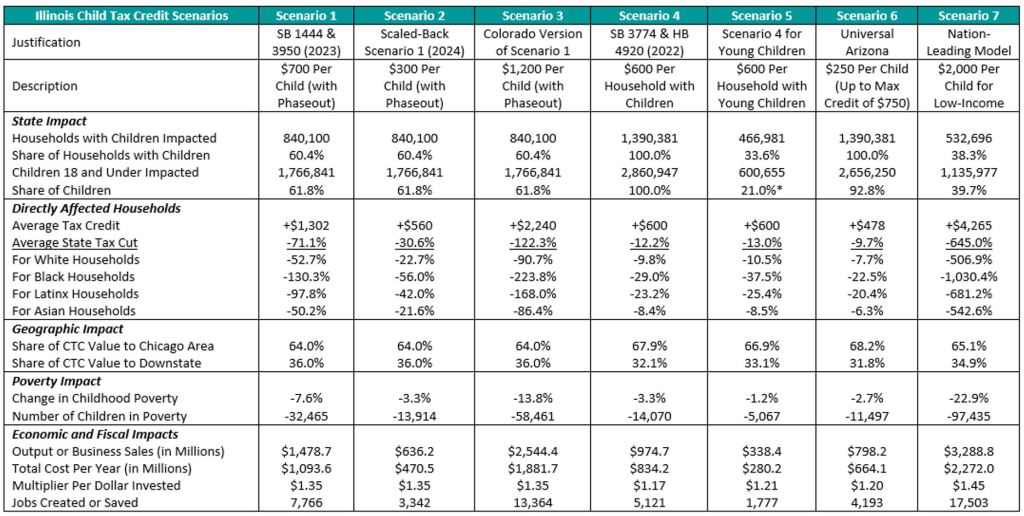
In assessing the potential for a permanent state Child Tax Credit law for Illinois, ILEPI & PMCR researchers used American Community Survey data from the U.S. Census Bureau and industry-standard IMPLAN modeling to evaluate seven possible scenarios—including Child Tax Credit bills that were introduced in the General Assembly in 2022, 2023, and 2024, modified versions of these proposals, and systems more akin to Child Tax Credits already on the books in 15 other states.
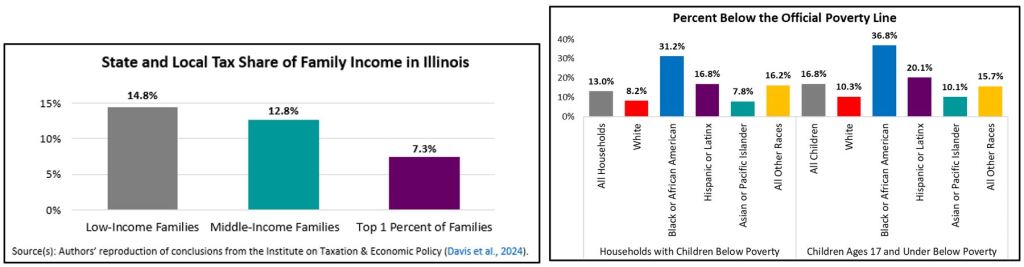
Researchers noted that, because of Illinois’ current tax system features a flat-rate income tax and relatively high property tax rates, low- and middle-income households pay a substantially higher share of their incomes in state and local taxes than their wealthier counterparts. They also detailed how both poverty disproportionately afflicts Black and Latinx households and children. Finally, they presented economic research linking the temporary expansion of the federal Child Tax Credit in 2021 with a $27 billion boost to the U.S. economy that created or saved 511,000 jobs, driven by consumer spending from low- and middle-income families directly impacted by the policy.
“While recent proposals in the Illinois General Assembly and Child Tax Credits in effect in 15 other states offer a range of options for policymakers, the data is unambiguous,” said ILEPI Economist and study coauthor Frank Manzo IV. “America’s experience with Child Tax Credits has proven that they are an effective tool for reducing child poverty, delivering tax relief to working families, and addressing racial disparities while also creating jobs and growing our economy.”
The various CTC models analyzed by researchers differed in a number of ways—including the size of credit, whether it applied to all children in a household or just young children (under 4 years old), or whether the credit was applied universally regardless or income or phased out for higher-income earners.
Among proposals that have been offered in the Illinois General Assembly, Senate Bill 1444 and House Bill 3950 in 2023 would have offered a $700 credit per child that is phased out for single filers earning net incomes over $50,000 per year or joint filers with net incomes over $75,000 per year. That scenario would impact six-in-10 children, reduce child poverty by 8%, and boost the economy by $1.5 billion per year. A scaled-back version with a $300 credit would decrease child poverty by 3% and grow the economy by $636 million per year, while a scaled-up version with a credit that mirrors Colorado’s maximum value of $1,200 would reduce child poverty by 13% and boost the economy by $2.5 billion annually.
“From the standpoint of most efficiently combatting child poverty and maximizing economic growth, the data strongly supports frameworks that offer a higher per-child credit for low- and middle-income families,” said Domincan University Assistant Professor and study coauthor Dylan Bellisle, Ph.D. “Indeed, these models show reductions in child poverty as high as 23%, turned tax liabilities into meaningful refund checks for eligible households, and generated anywhere from $1.35 to $1.45 in returns to the state’s economy for every dollar invested in the program.”
Overall, the frameworks analyzed by researchers varied in annual cost from $280 million per year to nearly $2.3 billion, with the majority costing less than $1 billion—which would account for less than 2% of Illinois’ General Fund budget. However, researchers noted that a Child Tax Credit would produce offsetting savings for taxpayers through its impacts on poverty. For example, the data reveal that Illinois spent 15% less on the Special Supplemental Nutrition Program for Women, Infants and Children (WIC) and Earned Income Credit (EIC) benefits in the year the federal CTC was expanded.
“It is important to view Child Tax Credits as an investment in children,” concluded University of Illinois at Urbana-Champaign Professor, PMCR Director and study coauthor Robert Bruno, Ph.D. “Child Tax Credits improve the health, educational, and employment outcomes of our children while reducing their vulnerability to negative life outcomes—resulting in higher tax collections and cumulative taxpayer savings over time. Considered alongside their immediate effects of reducing child poverty and boosting economic growth, it’s clear that robust Child Tax Credits yield long-term gains that more than offset any short-term cost to taxpayers.”
The Illinois Economic Policy Institute (ILEPI) is a nonprofit organization which uses advanced statistics and the latest forecasting models to promote economic growth for businesses and working families.
The Project for Middle Class Renewal (PMCR) at the University of Illinois investigates working conditions in today’s economy to elevate public discourse aimed at reducing poverty, create more stable forms of employment, and promote middle-class jobs.
 The Illinois Update