Prevailing Wage Contract Thresholds Lower the Bar in Public Construction

Weakening prevailing wage by raising a contract threshold has negative impacts on local contractors, construction workers, and economies, according to a new study. The report, An Analysis of the Impact of Prevailing Wage Thresholds On Public Construction: Implications for Illinois, … Continue reading Prevailing Wage Contract Thresholds Lower the Bar in Public Construction

New Study: Michigan Prevailing Wage Repeal Will Kill Jobs and Hamper Economy

Frank Manzo IV is the Policy Director of the Illinois Economic Policy Institute (ILEPI). Visit ILEPI at www.illinoisepi.org or follow ILEPI on Twitter @illinoisEPI. Lansing – Just completed research by the Midwest Economic Policy Institute, Colorado State University Economist Kevin Duncan … Continue reading New Study: Michigan Prevailing Wage Repeal Will Kill Jobs and Hamper Economy

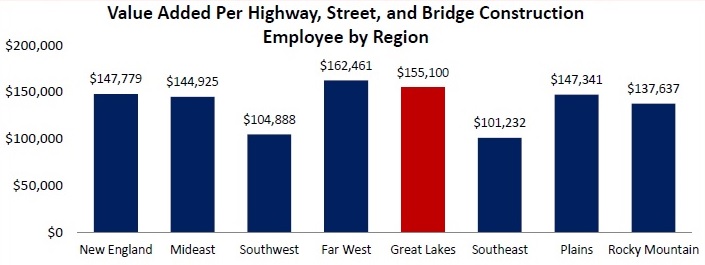
Road Construction Workers in the Midwest are VERY Productive

Frank Manzo IV is the Policy Director of the Midwest Economic Policy Institute (MEPI). Visit MEPI online follow the affiliated Illinois Economic Policy Institute on Twitter @illinoisEPI. Construction workers who specialize in road and bridge infrastructure projects are productive, high-skilled, and well-paid in the Midwest, … Continue reading Road Construction Workers in the Midwest are VERY Productive

Fact Checking Governor Rauner

Frank Manzo IV is the Policy Director of the Illinois Economic Policy Institute (ILEPI). Visit ILEPI at www.illinoisepi.org or follow ILEPI on Twitter @illinoisEPI.


Today the Illinois Economic Policy Institute (ILEPI) released A Turnaround or a Turn Aground? Fact Checking Governor Rauner’s First Claims (PDF). The report evaluates statements made by new Governor Bruce Rauner during his first month in office. Governor Rauner’s ambitious policy agenda aims to fix Illinois’ fiscal crisis mainly through a constitutional amendment on public sector pensions, changes to the state’s tax code, and adjustments to the state’s labor laws– including banning political contributions from certain labor unions and implementing local right-to-work laws which reduce the power of unions. Would his proposals, if enacted, accomplish his goal of making Illinois a “competitive” and “compassionate” state? Are his policy proposals supported by evidence and fact? Of the eleven claims analyzed, ILEPI finds that:

  • Two (18.2 percent) were found to be true,
  • Three (27.3 percent) were rated as only half true, and
  • Six (54.5 percent) were deemed to be false.

A summary of the fact check is below:

ONLY HALF TRUE: Illinois Job Creation Lags Behind Neighboring States

Rauner’s numbers are misleading and may be out of date. While the Illinois labor market has lagged slightly behind the economies of neighboring states, the actual disparity is much smaller than Rauner suggests. The largest year-over-year unemployment rate decline in America occurred in Illinois, where the unemployment rate fell by 2.7 percentage points. Using correct payroll data, this claim is found to be only half true.

FALSE: Illinois is Currently a Bad Place to Do Business

Outcomes matter. Rauner uses rankings of corporate executives to suggest that Illinois is a terrible place to do business, but the claims have no predictive power of a state’s unemployment rate and are negatively correlated with average wages in a state. A good state for business should be statistically related to lower unemployment and higher worker wages. The appropriate policy is to attract high-road employers with sound infrastructure and a skilled workforce. After completing the rest of the story, the claim that Illinois is a bad state in which to do business is found to be false.

TRUE: Raising the Minimum Wage to $10.00 Will Increase Earnings

To generate full economic benefits, the minimum wage should be expanded to cover employers with 2 or more employees, indexed to the chained-Consumer Price Index, paired with an expansion of the state’s Earned Income Tax Credit, and be applicable to workers in their first 90 days of employment. Without these additions to the new minimum wage law, this claim will only be half true. With meaningful change, this claim is found to be true.

FALSE: Right-to-Work Would Help Workers in Illinois Continue reading “Fact Checking Governor Rauner”

McHenry County Should Adopt Its Prevailing Wage Ordinance

Frank Manzo IV is the Policy Director of the Illinois Economic Policy Institute (ILEPI). Visit ILEPI at www.illinoisepi.org or follow ILEPI on Twitter @illinoisEPI. The call by McHenry County Board Members to partner with other county governments to challenge Illinois’ prevailing wage determinations would be a waste of government resources, according to a new study by the Illinois Economic Policy Institute. The report, Building a Strong McHenry: How Prevailing Wage Works [PDF], finds that prevailing wage is necessary to prevent government bodies– such as the McHenry County Board– from using their massive purchasing power to undercut the established labor market. The policy is also … Continue reading McHenry County Should Adopt Its Prevailing Wage Ordinance

Prevailing Wage Encourages Self-Sufficient Workers

Frank Manzo IV is the Policy Director of the Illinois Economic Policy Institute (ILEPI). Visit ILEPI at www.illinoisepi.org or follow ILEPI on Twitter @illinoisEPI. Taxpayers are subsidizing the low-wage, low-skill, low-quality system in states without a prevailing wage law, according to a report released jointly today by the Midwest Economic Policy Institute and Building Strong Communities. The Policy Brief, Self-Sufficient Construction Workers: Why Prevailing Wage Laws are the Best Deal for Taxpayers [PDF], finds that prevailing wage laws (PWLs) build local middle-class jobs and drive economic development through increased consumer demand. By paying a living wage and supporting apprenticeship training programs, PWLs encourage … Continue reading Prevailing Wage Encourages Self-Sufficient Workers

The CCW is Common Sense Construction

Today, the Midwest Economic Policy Institute released Common Sense Construction: The Economic Impacts of  Indiana’s Common Construction Wage with the University of Illinois School of Labor and Employment Relations and Smart Cities Prevail. The report finds that Indiana’s Common Construction Wage (CCW) promotes positive labor market outcomes for both construction workers and contractors. Full report [pdf] One-page summary [pdf] Ten facts about the Indiana CCW: 1. The Common Construction Wage keeps Hoosier jobs local. (For more, see pages 5 and 11-13) 2. The Common Construction Wage does not increase total construction costs for public projects. (Pg. 4) 3. The Common Construction Wage promotes an upwardly-mobile, high-road economy for working families. (Pg. … Continue reading The CCW is Common Sense Construction

Income Inequality is Fixable in Construction

Frank Manzo IV is the Policy Director of the Illinois Economic Policy Institute (ILEPI). Visit ILEPI at www.illinoisepi.org or follow ILEPI on Twitter @illinoisEPI. “Today, after four years of economic growth… average wages have barely budged. Inequality has deepened. Upward mobility has stalled. The cold, hard fact is that even in the midst of recovery, too many Americans are working more than ever just to get by – let alone get ahead.” –President Obama in the State of the Union Address, 2014. Across the country, states and localities can respond to the President’s call to action and grow wages, create jobs, and reduce … Continue reading Income Inequality is Fixable in Construction