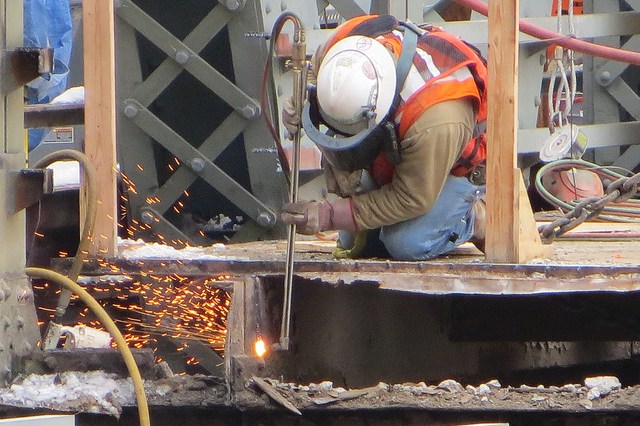
Prevailing Wage Is the Local Market Rate in Illinois

A new report from the Illinois Economic Policy Institute (ILEPI) finds no evidence for the assertion that prevailing wage “inflates” construction worker wages in Illinois. In fact, after analyzing counties along Illinois’ border, the report finds that a higher prevailing wage for operating engineers has no statistical impact on employment or turnover for men working in road construction. Instead, local market conditions are by far the primary drivers of public construction outcomes.  Continue reading “Prevailing Wage Is the Local Market Rate in Illinois”

Is International Trade Good or Bad for Illinois?

What impact does international free trade have on the Illinois economy? Is it mostly good, mostly bad, or somewhere in between? How can Illinois capitalize on the benefits of trade while mitigating the losses? A new report by the Illinois Economic Policy Institute and the Project for Middle Class Renewal at the University of Illinois at Urbana-Champaign investigates. Continue reading “Is International Trade Good or Bad for Illinois?”

8 of the 10 Most-Equal, Highest-Paying Occupations in Illinois Are in Construction

The majority of high-wage, low-inequality jobs in Illinois are in construction occupations, law enforcement careers, and firefighting positions. Politically-driven efforts to repeal the state’s prevailing wage law or to weaken public sector unions would decimate a majority of the middle-class occupations that remain for blue-collar workers in the state.

Continue reading “8 of the 10 Most-Equal, Highest-Paying Occupations in Illinois Are in Construction”

Illinois Should Restore Wind Energy Funding

The State of Illinois should restore investment in wind power and other clean energy infrastructure to at least 2015 levels, according to the Illinois Economic Policy Institute in a new Economic Commentary [PDF].

Wind power generates positive impacts for the people of Illinois. Previous investments already prevent the emission of 7.6 million metric tons of carbon dioxide from Illinois and save 4.5 billion gallons of water every year. In addition, wind power has saved Illinois residents millions of dollars.

Continue reading “Illinois Should Restore Wind Energy Funding”